

Letter from the Chair
2025 was a year of significant change in world trade, with tariffs marking the end to the assumption of an ever more global, rules-based world economy. In parallel with political change, AI is on the way to shaking up how things get done across almost every sector. It feels a long way from the calm globalist predictions in Friedman’s ‘The World is Flat’ or Fukuyama’s ‘The End of History’.
Uncertainty is, of course, also an opportunity. Firms are investing in AI to create new, more productive, more powerful ways of working. Firms are establishing new trade corridors, helped by the rapid growth in bilateral trade deals that governments are striking, even if that means dealing with a more complex set of rules and regulations.
TMF Group’s purpose is to help firms invest and operate safely around the world. We believe that helping nations trade together is the best path to peace and prosperity. Our platform covers 95% of the world economy as a single solution for clients to manage their investments and operations across whatever locations they require, absorbing the growing regulatory burden they face. We are ideally placed to help firms set up and manage along new trade corridors, and to bring them innovative technologies that create efficiency and control across their footprint.
In 2025, we performed well, continuing the pattern of solid revenue and EBITDA growth. We also took important steps to upgrade our capabilities so that we are fit for our purpose at a time when we are needed more than ever. We expanded our product and geographic coverage, we upgraded our solutions and we invested in a more resilient backbone for the firm. We also continued to improve client care, with a big increase in Net Promoter Score and in new business.
As a Board, we recognise that our clients seek to consolidate often fragmented support with a few stable, long-term partners. Accordingly, along with client service, we manage the risk profile of TMF Group with great care to make sure we can be their trusted partner. That includes the operational risks in the day-to-day running of a global professional services firm. It extends to strategic risks like geopolitical turmoil and AI disruption. These are less about day-to-day processes and more about our business profile and how we develop it. We focus on critical services, we avoid revenue concentration and we are financially conservative. Those help mitigate strategic risks so that we can continue to focus on serving our clients, absorbing whatever an uncertain world may throw at us.
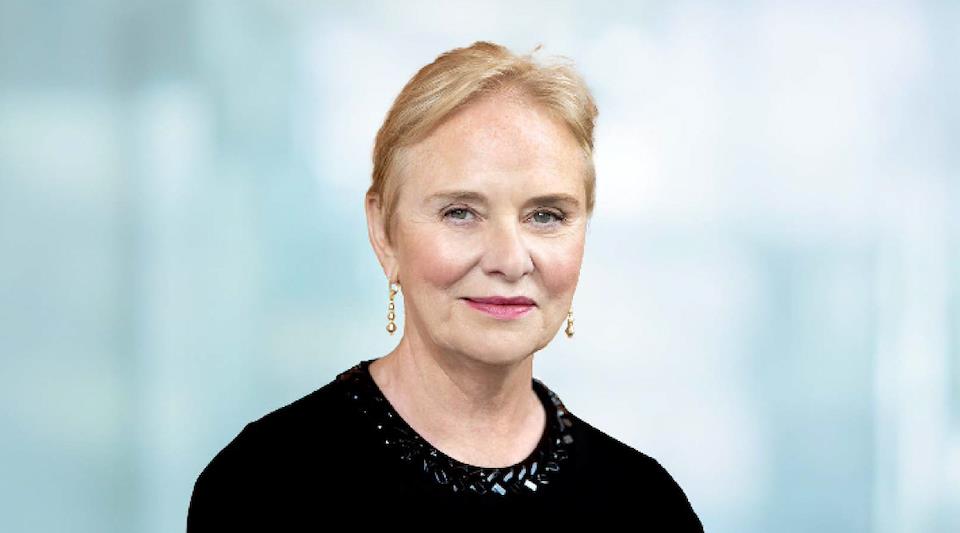
Ann Cairns | Chair of Supervisory Board